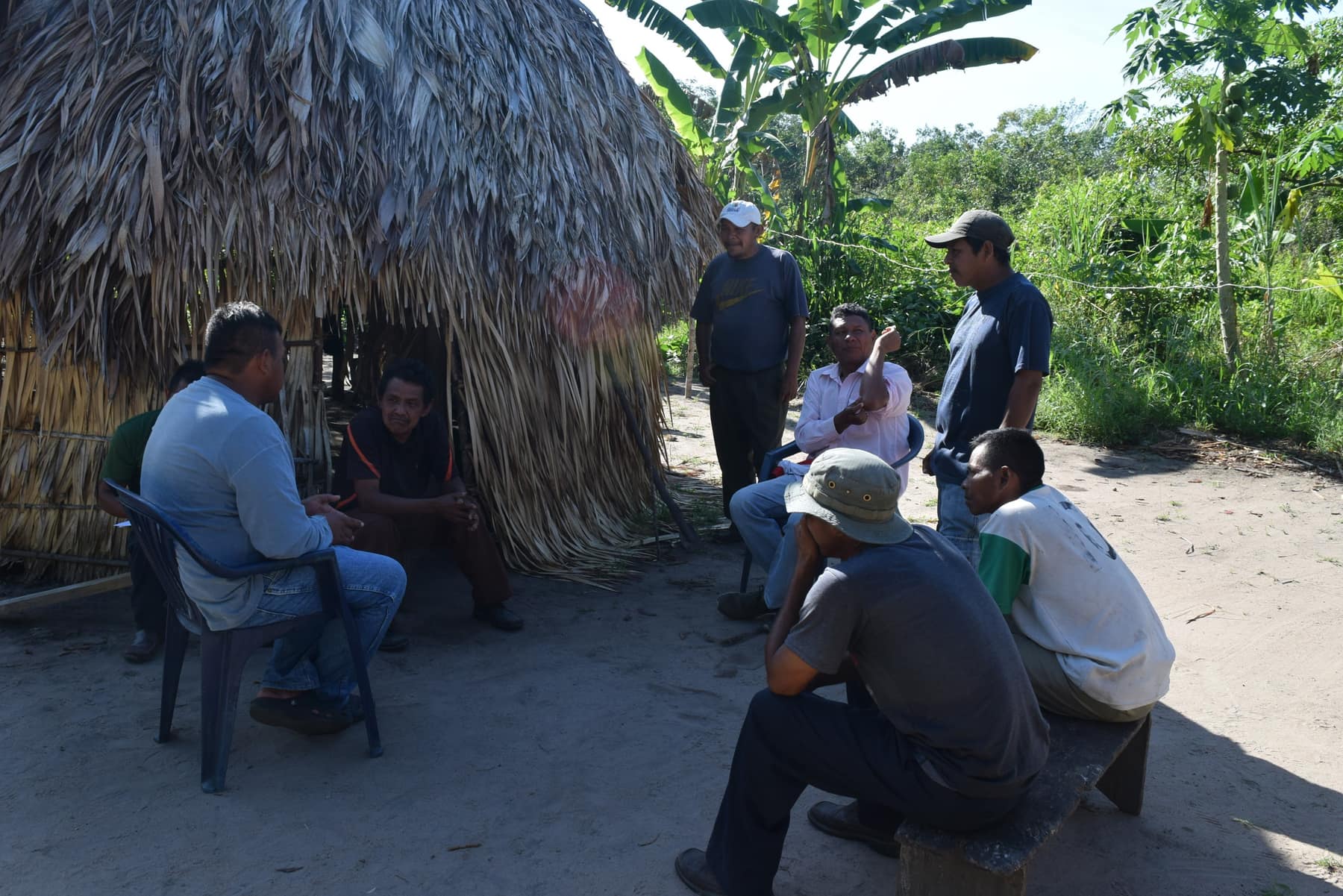
In many rainforest communities, a laying hen means something very concrete: eggs for the children’s breakfast, protein when fishing is poor, and a small income when the family needs something the river can’t provide. That is why poultry keeping keeps coming up as a simple way to walk alongside families.
Yet anyone who has seen a few of these projects knows that buying the first birds is the easy part. The hard part is that, two or three years later, the henhouse is still running when the visits and outside help have stopped. Sustainability isn’t in the donation: it’s in what the community learns, decides and makes its own.
Start small, and start with the community
A project that grows out of a conversation with the community has a better future than one that arrives already designed. Before building anything, it’s worth asking: who will care for the birds every day? Are they for eating or for selling? What happens in the rainy season?
Starting with a few birds makes it possible to learn without risking too much. A mistake with ten hens can be fixed; a mistake with two hundred can discourage everyone.
Feed that doesn’t depend on the river
The biggest risk for a henhouse in the jungle is feed. If it depends entirely on commercial feed that arrives by boat, a single delay, a flood or a price increase can stop the project.
So it’s worth combining purchased feed with what the community already grows: cassava, corn, plantain, harvest leftovers, and letting the birds forage in protected spaces. The goal isn’t to replace commercial feed completely, but to stop depending on it alone.
Knowing, not just having
Training is what remains when the technician leaves. Learning to spot a sick bird, keep the henhouse clean, separate new birds, keep water clean and keep a simple record of eggs and expenses is the difference between a project that lasts and one that fades away.
That knowledge has to live in several people, not just one. If only one family knows how it works, the project depends on that family never moving away or falling ill.
Clear accounts and shared responsibility
When a project belongs to “everyone”, it sometimes ends up belonging to no one. It helps to agree from the start who does the daily care, how eggs are shared, how much is set aside to buy feed and how birds are replaced. Clear accounts prevent conflict and let the project grow with its own resources.
Stewardship: caring for what God entrusts
For the church, a henhouse isn’t just a productive project. It’s a chance to teach stewardship with our hands: caring well for what God places in them, working diligently and sharing with those who have less.
“Be thou diligent to know the state of thy flocks, and look well to thy herds.” Proverbs 27:23
The verse speaks of flocks, but the principle holds in the rainforest too: know, care and pay attention. In the end, a sustainable poultry project is a community that has learned how to keep it going.